If you ask someone what makes a home comfortable, most people will usually point to one thing.
Better insulation.
Double glazing.
A heat pump.
Perhaps underfloor heating.
It’s a perfectly natural way to think about buildings. We like simple answers to complex questions, and it’s easy to assume that one major upgrade must be responsible for the way a home performs.
But after spending enough time around high-performing buildings, a different pattern begins to emerge.
The homes that consistently feel warm, comfortable and stable throughout the year rarely achieve that because of one premium product or one particularly clever design feature. Instead, their performance is usually the result of hundreds of smaller decisions, each contributing a little to the overall outcome. Individually, many of those decisions seem almost insignificant. Together, they can completely change how a home feels to live in.
As expectations around new homes continue to rise, understanding this idea is becoming increasingly important.
Buildings are systems, not individual products
One of the biggest misconceptions about residential construction is thinking of a house as a collection of separate products. We often compare insulation, windows, cladding or heating systems individually, as though each one performs independently of everything around it.
In reality, a building behaves much more like a complete system.
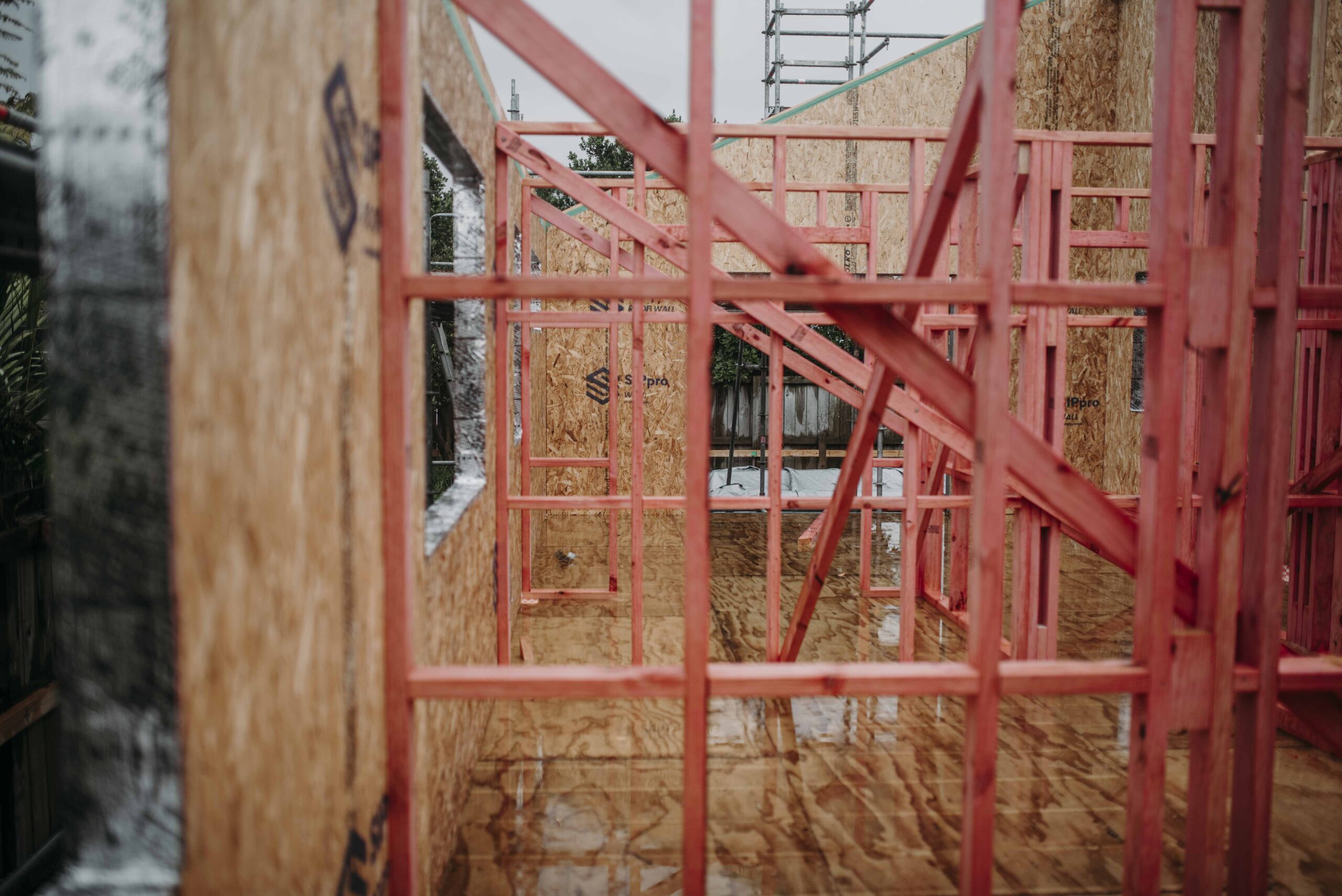
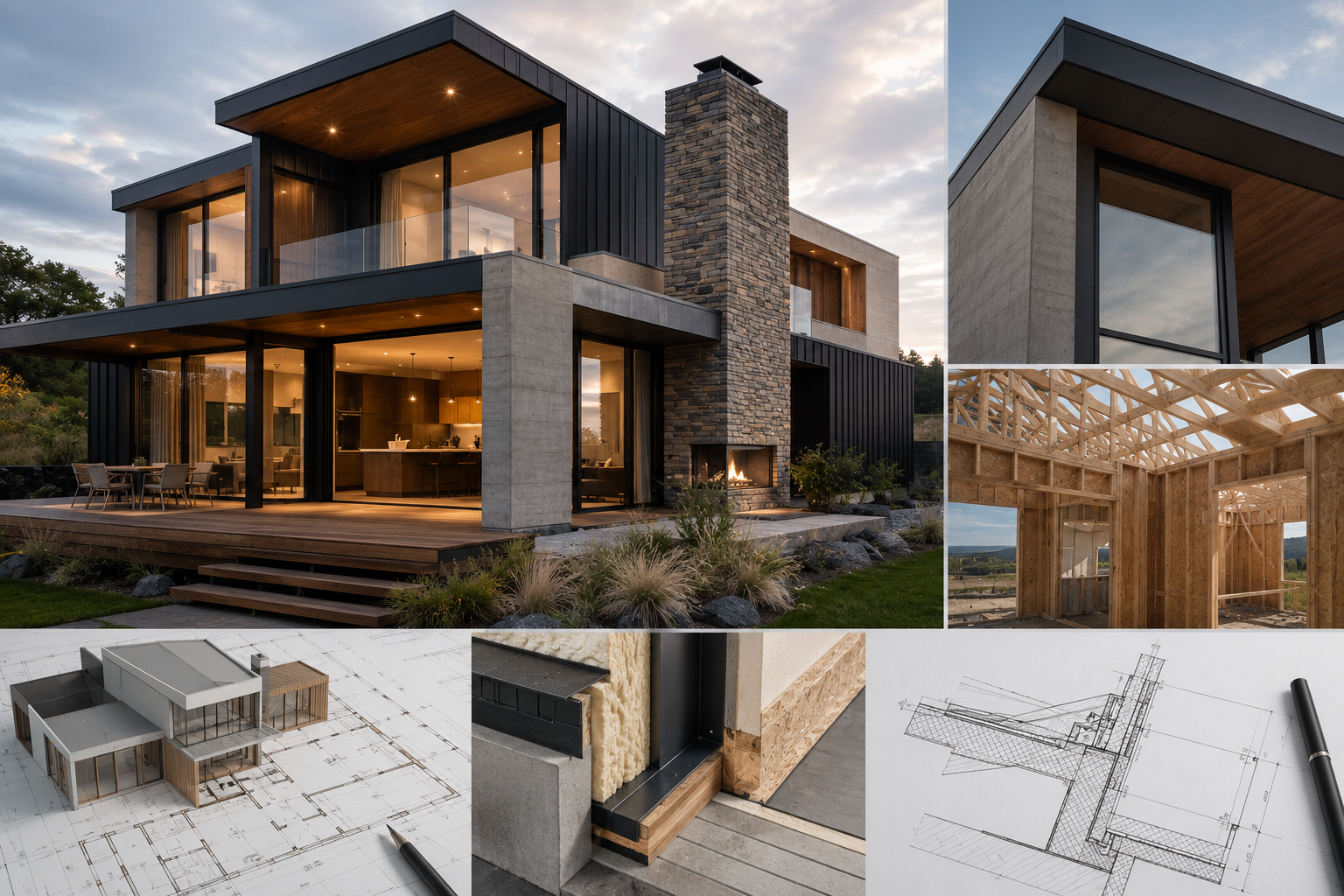
Every part of the building envelope influences the others. The floor connects to the walls. The walls connect to the roof. Windows interrupt insulated wall assemblies. Junctions connect different materials together, while ventilation, moisture management and airtightness all interact in ways that aren’t always immediately obvious.
Because of this, no single component can determine how a home performs on its own. The overall result depends on how well all of those elements work together.
This is one of the reasons experienced architects and building designers spend so much time thinking about the entire envelope rather than focusing on individual products in isolation.
Performance is cumulative
One useful way to think about building performance is as a series of small gains rather than one dramatic improvement.
Imagine two homes built to similar budgets with comparable floor areas, layouts and insulation levels. From the street, they may appear almost identical, yet once winter arrives, one feels noticeably more comfortable than the other. It stays warmer overnight, has fewer cold spots and requires less heating to maintain a pleasant temperature.
Often there isn’t one obvious reason for that difference.
Instead, it comes from the accumulation of many smaller decisions made throughout the design and construction process. Perhaps one home has slightly better airtightness. Its windows are positioned to capture more winter sun. The insulation has been installed more consistently. Thermal bridging has been reduced at key junctions, and greater care has been taken around sealing penetrations through the building envelope.
None of those decisions may seem particularly significant on their own. However, when dozens of them all work towards the same objective, the overall performance of the building can improve substantially.
Thermal performance is about much more than insulation
Insulation is often the first thing people think about when discussing energy-efficient homes, and understandably so. It’s one of the easiest aspects of a building to compare because it comes with clear performance ratings and measurable R-values.
However, insulation is only one part of the equation.
Even highly insulated walls can lose more heat than expected if there are numerous thermal bridges passing through the assembly. Likewise, excellent insulation cannot compensate for significant air leakage around windows, poorly detailed junctions or gaps left during installation.
Building science has increasingly shifted away from viewing components in isolation and towards understanding how the complete envelope performs as a system. A wall doesn’t simply need good insulation; it also needs effective detailing, careful installation and continuity with the surrounding construction.
This systems-based approach is becoming increasingly important as homeowners expect more from modern buildings.
Windows provide a good example
Glazing illustrates this principle particularly well.
Many homeowners ask whether upgrading to better glazing is worthwhile, but the answer is rarely as straightforward as comparing one window specification with another.
The performance of a window depends on far more than the glass itself. Window size, orientation, frame material, thermal breaks, installation quality, surrounding wall construction, shading and airtightness all influence how that window behaves once it becomes part of the building envelope.
A high-performance glazing system that is poorly integrated into the surrounding construction may never deliver its full potential. Equally, a well-designed window installed carefully within a thoughtfully detailed building envelope can contribute significantly to overall comfort.
Once again, it is the combination of decisions that matters rather than any one feature alone.

Good workmanship remains one of the most important factors
Modern construction products continue to improve, but even the best products still rely on good workmanship.
Insulation that is poorly fitted will not perform as intended. Flashings that aren’t installed correctly can compromise moisture management. Small gaps around service penetrations can affect airtightness, while inconsistent detailing around junctions may reduce thermal performance long before the occupants ever notice.
This is one of the reasons experienced builders place such importance on quality detailing. Many of the most important aspects of a building are hidden once construction is complete, yet they continue influencing comfort and durability for decades.
Good workmanship doesn’t simply protect individual products; it allows the entire building system to perform as it was designed.
Comfort is really about consistency
One of the biggest differences people notice when they move into a genuinely high-performing home is not necessarily that it becomes hotter.
Instead, it becomes more consistent.
Temperatures fluctuate less throughout the day. There are fewer cold areas beside windows or external walls. Rooms remain comfortable for longer after the heating is turned off, and the house generally requires less effort to maintain a pleasant indoor environment.
That consistency is rarely created by one expensive upgrade. More often, it reflects hundreds of careful decisions made throughout the design, manufacturing and construction process.
Each one contributes a small improvement, and over time those improvements begin reinforcing one another.
Expectations are changing
The way people judge new homes is changing.
Simply meeting the Building Code is no longer enough for many homeowners. Increasingly, people expect homes that stay warm for longer, cost less to heat, maintain more stable temperatures and provide a consistently comfortable indoor environment throughout the year.
Meeting those expectations requires thinking beyond individual products.
Instead, it encourages a more holistic approach where structure, insulation, glazing, airtightness, moisture management and construction quality are all considered as parts of one complete system.
This shift is influencing how architects design, how manufacturers develop products and how builders approach construction on site.
The takeaway
It’s easy to believe there must be one product or one decision that transforms the performance of a home.
In reality, buildings rarely work that way.
The homes that consistently perform well are usually the result of many good decisions working together. Every well-detailed junction, carefully installed window, continuous layer of insulation and thoughtfully considered design choice contributes something to the finished building.
None of those decisions may seem revolutionary on their own, but collectively they shape how comfortable, efficient and durable a home becomes over the decades that follow.
Perhaps that’s one of the most important lessons modern construction continues to teach us. High-performing homes are rarely created by one brilliant idea. More often, they are built through the steady accumulation of hundreds of good decisions, all pointing in the same direction.