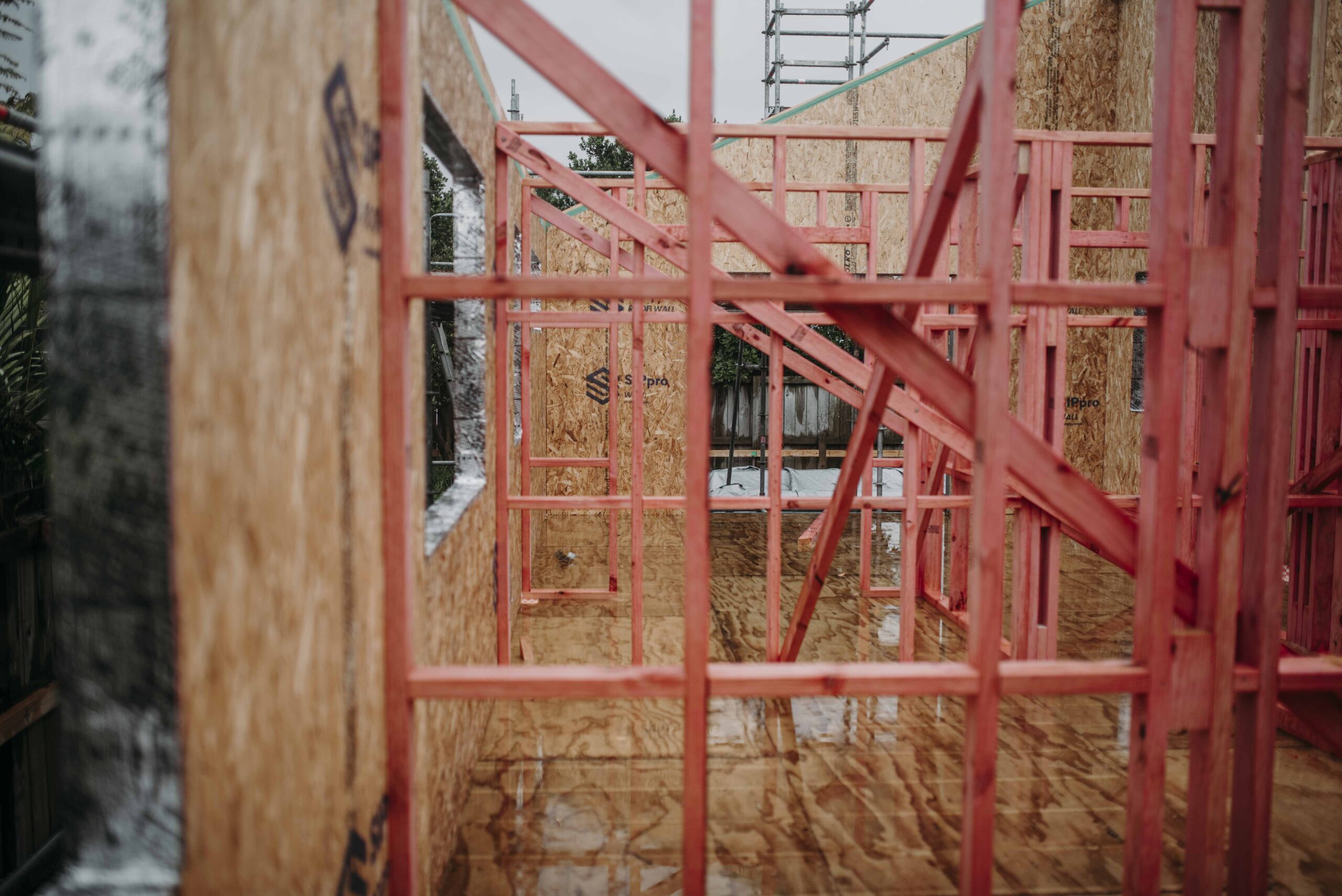
One of the least discussed problems in residential construction is this:
A building can be well designed, fully consented and entirely compliant on paper, yet still underperform once built.
Why?
Because performance is not delivered by drawings alone. It is delivered by execution.
The assumption the industry still makes
There is an unspoken assumption in a lot of residential work that if the specification is good enough, the outcome will follow.
But site delivery is inherently variable.
BRANZ has been explicit that quality issues in NZ housing range from poorly installed insulation to badly poured slabs and reinforcing problems, and that pressure in the sector increases the risk of varying quality in building work.
That matters more now because modern envelopes are less forgiving than older ones.
The small defects that become big performance problems
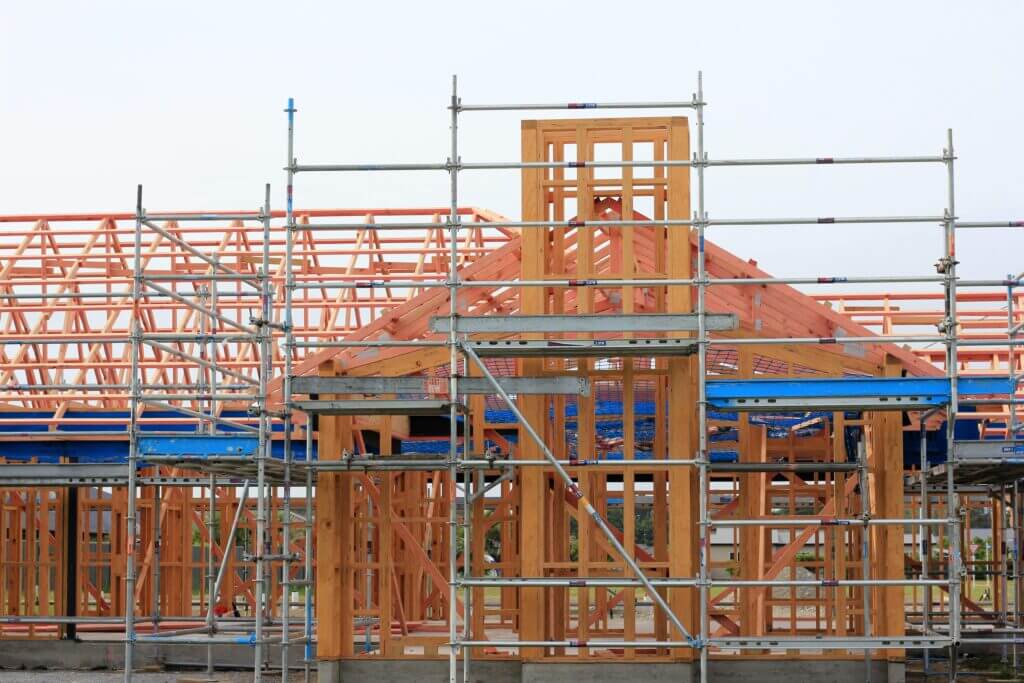
A lot of thermal and moisture failures do not come from dramatic mistakes. They come from ordinary site inconsistency:
- insulation cut loosely or compressed around services
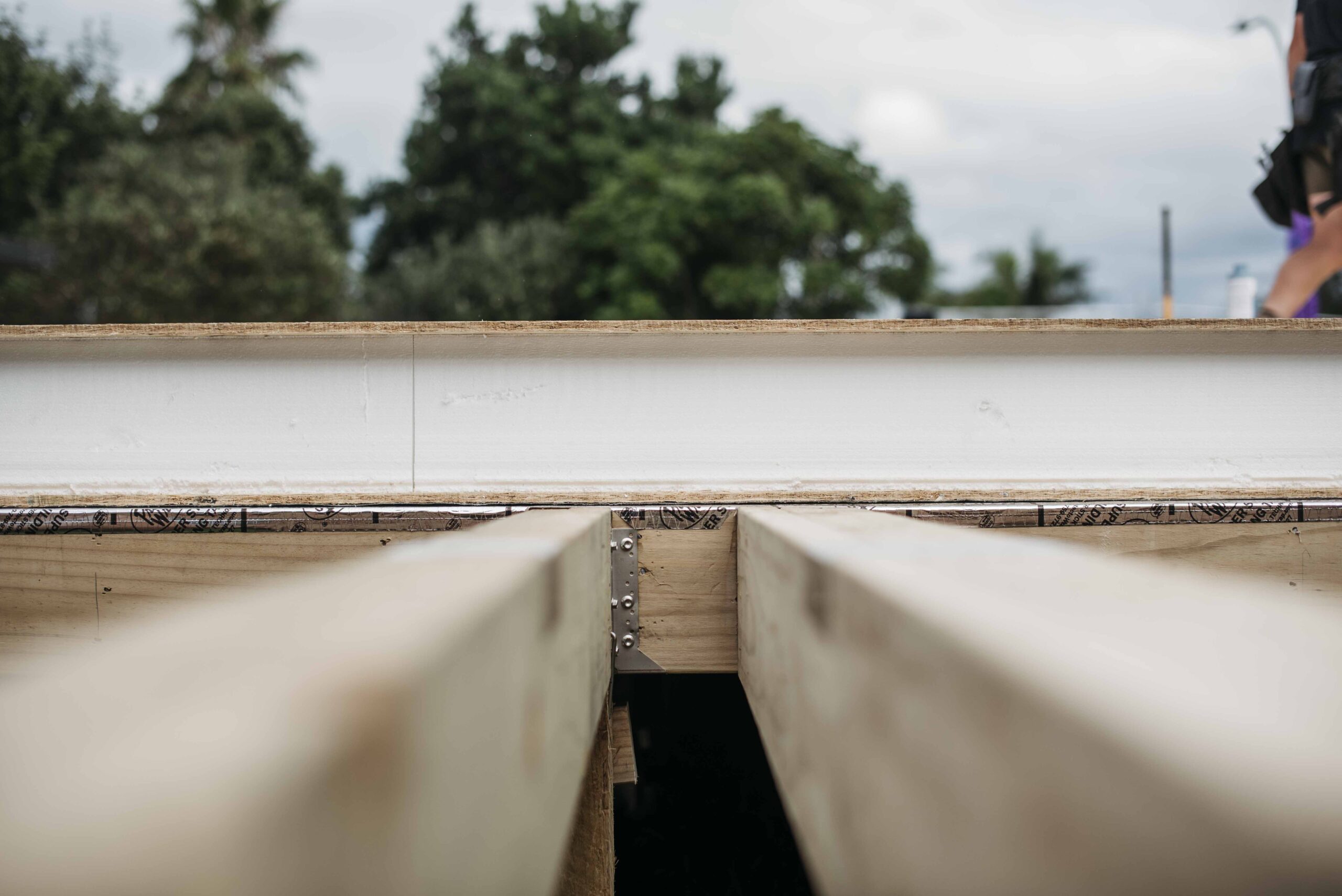
- gaps left at edges and junctions
- air barriers interrupted by penetrations
- sequencing that leaves parts of the envelope exposed or awkward to complete later
- details that require multiple trades to interpret the same intent the same way
BRANZ’s own housing-condition work shows how common basic insulation defects are. Around half of houses had at least one roof-space insulation defect that could reduce effectiveness, including gaps, settling, poor fit and displaced insulation. That is existing housing, not a perfect proxy for every new build, but it is a useful reminder that installed performance often diverges from nominal performance.
Why this matters more post-H1
The higher the performance target, the smaller the margin for error.
Once you start aiming for stronger thermal envelopes, lower thermal bridging and better airtightness, small inconsistencies matter more.
BRANZ’s research into thermal bridging in external timber-framed walls found average framing content above 34% across 47 new dwellings, much higher than the 14–18% commonly assumed by regulators and industry. BRANZ said this level of framing could compromise wall performance and mean designed R-values are not being achieved.
That is a useful example because it shows how a wall can be “designed” one way and behave another way in practice.
Where variability tends to enter the build
There are a few recurring pressure points.
Junctions
This is where intent is easiest to lose. If a detail is unclear or awkward, the site will solve it in real time.
Trade handovers
The more trades that must line up precisely, the more risk there is that continuity gets broken between stages.
Weather exposure
Before lock-up, weather adds another layer of variability. Materials get wet, sequencing changes, temporary decisions become permanent ones.
Skill spread
Even good firms can have variability between crews or subcontractors. Medium-density housing research from BRANZ has also pointed to skill gaps in the sector as NZ tries to deliver more complex building types.
What better-performing projects do differently
The projects that translate best from drawing set to built outcome usually have a few things in common:
They resolve more early.
They reduce interpretation on site.
They simplify where possible.
They treat detailing as a delivery tool, not just a documentation requirement.
That does not mean every project needs to become simplistic. It means the details need to be buildable repeatedly, not just technically defensible.
Why this changes the way architects need to think
For architects, this is not just a contractor problem.
It is a design problem too.
If a building depends on perfect sequencing, perfect workmanship and perfect interpretation across multiple parties, then the design is carrying hidden delivery risk.
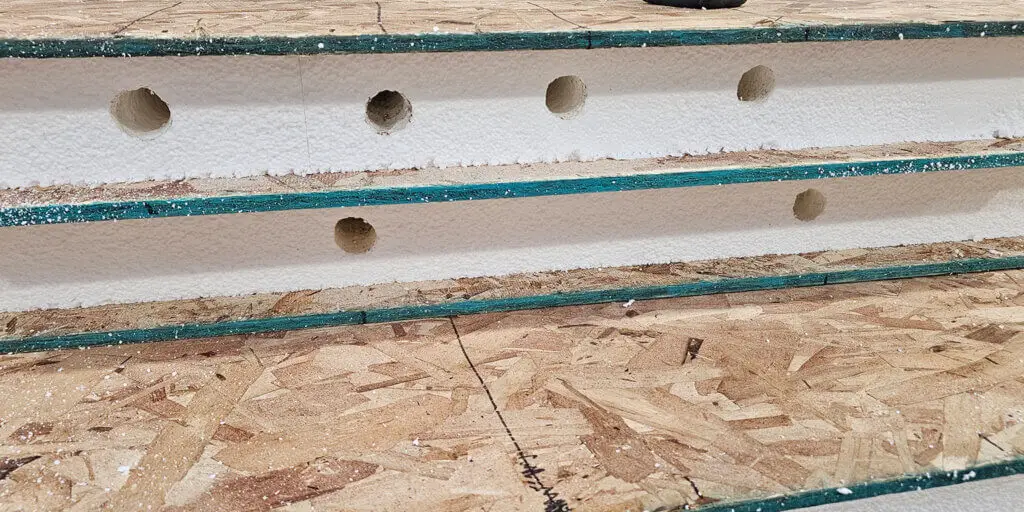
That is one reason there is growing interest in systems and assemblies that reduce site variability, not only for speed but for consistency. BRANZ’s broader quality work and research into prefabrication and medium-density delivery both point to the value of reducing uncertainty and making performance less dependent on perfect site conditions.
The takeaway
The gap between design intent and built performance is often not caused by one big mistake.
It is caused by accumulated variability.
And the more demanding our buildings become, the less room there is for that variability to hide.